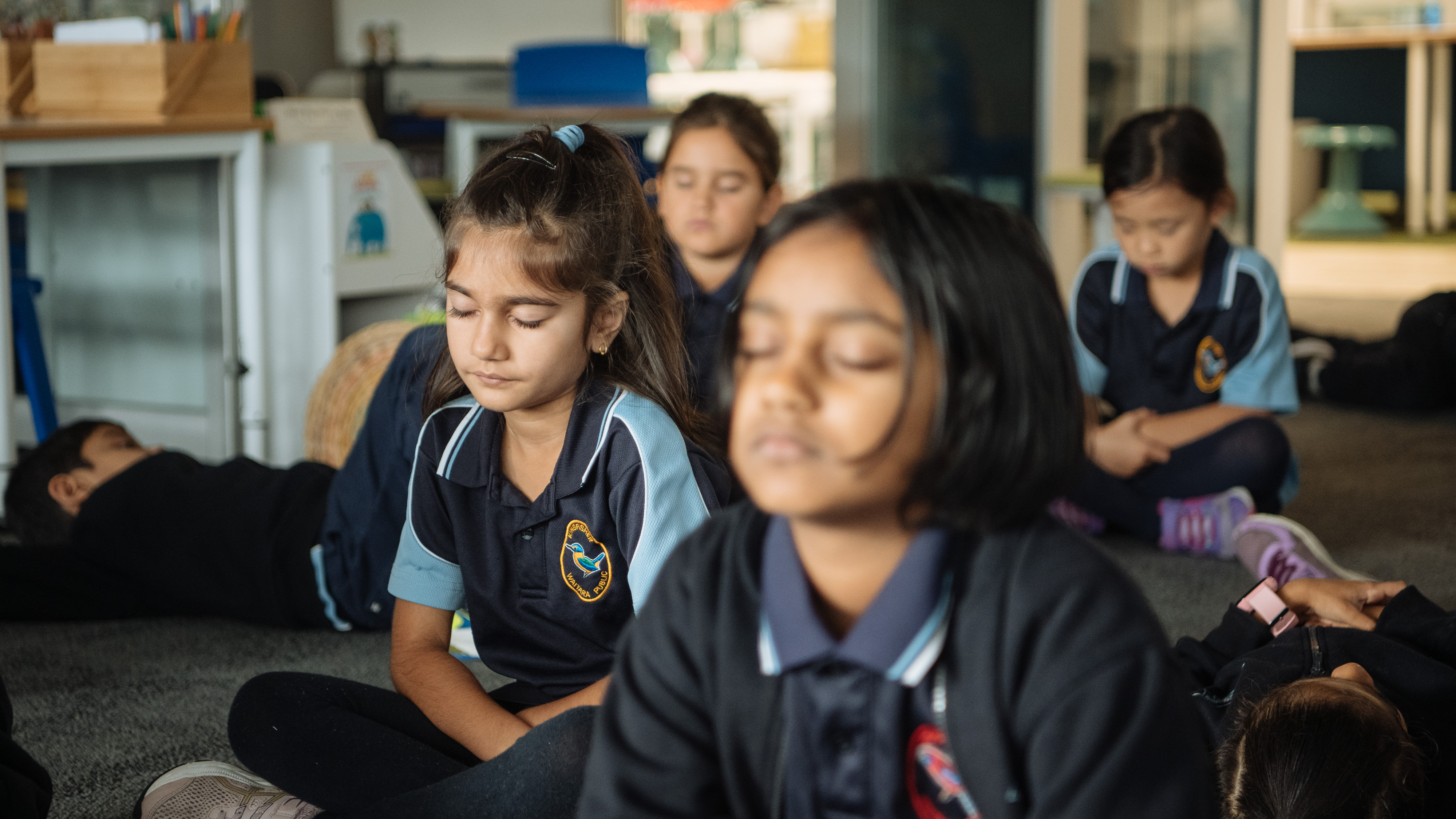


This Mental Health Month we are partnering with Medibank to help more families find practical ways to build mental fitness into everyday life. Discover how the everyday moments already happening in your family can help children build mental fitness - one small moment at a time.
Every October, Mental Health Month gives us an opportunity to think about how we support our own mental health and the mental health of the people around us. This year’s theme, Together We Thrive, is a reminder of something particularly important for families: connection.
And the good news is, supporting your child’s mental health doesn’t have to mean adding another thing to the family calendar. In fact, you might already be doing more than you realise.
It can happen in the conversation on the way home from school. In how you help them through a disappointment. In the laugh you share over dinner, the walk around the block, or those few quiet minutes before bed.
These moments can feel ordinary. But over time, they give children opportunities to notice what they’re feeling, work through challenges, connect with others, discover what helps them feel their best while building their mental fitness skills at the same time.
Mental fitness starts in everyday life
One way we can support children’s mental health is by helping them build mental fitness: skills they can practise proactively and draw on as they navigate everyday life and its challenges.
Like physical fitness, mental fitness develops through practice.
But that doesn’t mean you need to create a new mental fitness routine for your family. Home is already full of opportunities to practise these skills — and chances are, you’ll recognise quite a few of them.
Here are five everyday moments where mental fitness can show up.
1. On the way home: make space to notice
“How was your day?”
“Good.”
Sound familiar?
Getting children to tell us about their day isn’t always easy. And you don’t need to turn the trip home into a big conversation. Sometimes a different question can simply give children an opportunity to pause and notice what happened and how it made them feel.
You might try:
What made you laugh today?
Was anything tricky?
What gave you energy today?
What’s something interesting you noticed?
Some days this might spark a conversation. Other days you might get a shrug or a one-word answer.
That’s okay.
There doesn’t always need to be a lesson or solution at the end. Simply making space for children to notice their thoughts, feelings and experiences can help build greater awareness of what’s happening within and around them.
And sometimes the best thing we can do is listen.
Mental fitness skill: Live Mindfully
2. When plans change: practise flexible thinking
A friend cancels a playdate. The favourite snack has run out. It starts raining just as you’re heading to the park.
Small disappointments are part of family life.
They can also be opportunities for children to learn something important: difficult feelings are okay, and we can find our way through them.
When something doesn’t go to plan, you don’t need the perfect response or an immediate solution.
Sometimes simply acknowledging what your child is feeling is enough:
“Oh, you were really looking forward to that. It’s disappointing when plans change. I get it.”
And when they’re ready, you might wonder together: "what we could do instead?”
Embracing flexible thinking is learning that we can experience a difficult feeling, make space for it, and eventually find another way forward.
Giving children opportunities to practise this with smaller challenges can help them build skills they can draw on when they encounter bigger ones.
You can model this too:
“I’m disappointed our plans changed as well. I’m going to take a minute, then we can work out what to do.”
Children don’t only learn mental fitness from what we tell them. They learn from seeing the adults around them practise it too.
Mental fitness skill: Embrace Flexible Thinking
3. Around the table: find small moments of connection
The 2026 Mental Health Month theme, Together We Thrive, is a useful reminder that mental health isn't something we build entirely on our own.
Connection and supportive relationships matter.
As parents, we can put a lot of pressure on ourselves to make space for carved out quality time, when sometimes it feels like it simply can’t be scheduled. The good news is connection can happen while you’re eating breakfast. Driving to sport or a music class.. Walking the dog. Making dinner. Or sitting together for a few minutes at the end of the day.
You might try asking:
What was one good, hard or interesting part of your day?
Some days it might lead to a long conversation. Other days you might get three words, a shrug, or someone asking if they can leave the table to go play before the meal is finished.
That's okay, too. Connection doesn’t have to look perfect to matter.
Regularly making a little space to listen, talk, laugh or simply be together helps children experience connection as a normal part of family life.
Mental fitness skill: Grow Connections
4. In everyday challenges: help children see their strengths you already see
As parents and carers, we often notice things in our children that they don’t yet recognise in themselves.
Their determination. Their kindness. Their curiosity. The courage it took to try something new.
Everyday challenges give us opportunities to help children see those qualities too.
Parents and carers can help by noticing the process, rather than only the result.
Instead of focusing solely on the goal scored, the grade received or whether something went well, you might say:
“You kept trying even when that was difficult.”
“I noticed you included someone who was on their own.”
“You tried another way when your first idea didn't work.”
Small observations like these can help children put language around strengths such as persistence, kindness, courage and curiosity, and begin to recognise those strengths in themselves.
Mental fitness skill: Act Purposefully
5. At the end of the day: discover what helps your family recharge
Supporting mental health extends tot what happens in our bodies and how they are feeling too.
Movement, rest, relaxation and sleep all form part of Smiling Mind's Mental Fitness Model. For some families, the end of the day can provide an opportunity to slow things down together, that might look like:
-
reading together
-
taking a few slow breaths
-
doing some gentle stretching
-
listening to a short meditation
-
talking about something you appreciated that day.
Or it might look completely different in your family. Bedtime isn’t always peaceful. Children get overtired. Routines go out the window. Something that worked brilliantly yesterday might not get the same response today - and that is normal! Gradually discovering the things that help you and your little one recharge and having a few options to draw from can feel very useful.
Finding a simple way to transition from the activity of the day towards rest can become part of your family's regular rhythm to recharge your bodies.
Mental fitness skill: Recharge Your Body
Remember, the most powerful thing we can do is model it.
Perhaps the most humbling part of Parenting is that children are watching and learning how we each imperfectly navigate everyday life. Teaching moments happen when we deliberately set out to teach, but they happen most often from children observing how we handle our own setbacks at times, too.
When we say:
“I'm disappointed our plans changed too. I'm going to take a minute, then we'll work out what to do.”
“I've had a really busy day. I think I need five quiet minutes to recharge.”
We are showing our children mental fitness in action.
Why do the small moments matter?
Children build skills through opportunities to practise them. Repeated experiences of being listened to, supported through disappointment and given space for their feelings can help children build the skills and confidence to navigate life’s natural, harder moments over time.
This Mental Health Month, start with what you’re already doing
Mental Health Month can prompt important conversations about mental health. It can also remind us that supporting mental health is something we can practise throughout the year.
This year's Together We Thrive theme asks us to consider the role connection plays in our wellbeing.
For families, that can start in very ordinary places.
Start with something you're already doing and look for one small opportunity to notice, adapt, connect, recognise strengths or recharge together.
Small things stack up.
Build mental fitness together
Small moments can be opportunities to build mental fitness — and having practical tools to draw on can make it easier to put these skills into practice.
Explore the Smiling Mind x Medibank Mental Fitness Toolkit today!
Are you a Medibank member?
You can now find Smiling Mind practices in the Live Better Rewards section of the My Medibank app, with practical activities to help you and your family build mental fitness in everyday life.











.jpg)