

Practical ways to recognise what supports your wellbeing and build mental fitness into your school day.
A school day asks you to use your mind in all sorts of ways, from finding a fresh way to explain a concept to working through a disagreement or remembering who borrowed the last glue stick. Among all those moments of supporting students, there are opportunities to give your own mind some attention, too.
You probably already draw on mental fitness skills throughout your day. You might pause before responding to a difficult question, talk something through with a colleague or adapt a lesson when your first approach isn’t landing. Recognising these skills gives you something to build on, with small, deliberate practices that can support your wellbeing over time.
Of course, your wellbeing is also shaped by the conditions you work in. Workload, time, resources, relationships and leadership all matter. Looking after your wellbeing means paying attention to those conditions alongside the personal skills and support you can draw on.
Here are some ways to understand what’s asking the most of you, recognise what helps and bring mental fitness practice into the moments your day allows.
Start with what your week is asking of you
One useful way to understand workplace stress is to look at the balance between your demands and your resources.
Demands are the things that take sustained effort, attention or emotional energy. They might include a full timetable, competing priorities, classroom challenges or a conversation you’re still thinking about on the drive home.
Resources help you meet those demands and recover afterwards. Some come from your workplace, such as clear priorities, time to plan, supportive colleagues and access to the right materials. Others are personal skills and habits, including recognising when stress is building, considering different perspectives and making time for recovery.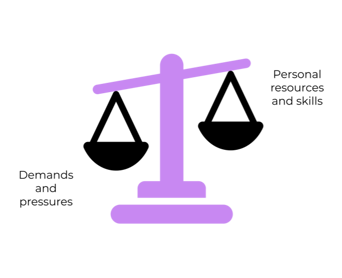
When demands keep outweighing the resources available, it can become harder to recover between one busy day and the next. Looking at both sides can help you work out where more support or a change in conditions would be useful, as well as which personal resources you’d like to strengthen.
Think back over the past week and ask yourself:
- What asked the most of me?
- What helped me through it?
- What could make a similar situation more manageable next time?
Perhaps a colleague helped you think through a classroom challenge, or a leader clarified which task could wait. You might have noticed that a walk after work helped you leave the day behind. These details can make it easier to identify a useful next step, whether that’s a conversation about priorities or time set aside to recharge.
Recognise the Exhaustion Funnel
When work gets busy, the things that help us recover can be surprisingly easy to move aside. A break becomes time to catch up on work, dinner with a friend gets postponed, and the book on the bedside table stays on the same page.
The Exhaustion Funnel, a concept developed by Professor Marie Åsberg, describes how activities that support our wellbeing can gradually fall away as demands increase. The things that seem easiest to put off, such as seeing friends, moving our bodies, enjoying a hobby or resting, can be the very things that help us recharge.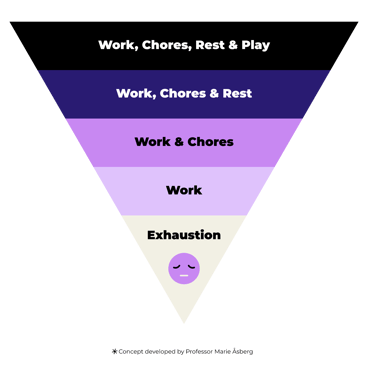
As those activities slip away, more of the week can become devoted to things that draw on your energy, with fewer opportunities to restore it. Recognising this pattern gives you a chance to decide what you’d like to keep making room for and where extra support could help.
Ask yourself: “When work gets particularly busy, what do I tend to stop doing?”
Then consider which of those things makes the biggest difference to how you feel. There may be a smaller or more flexible version you can keep in your week, such as a short phone call with a friend or a few minutes with your book before bed.
Five ways to practise mental fitness
Mental fitness refers to the skills and everyday habits that support our mental wellbeing, emotional resilience and mental health. Like physical fitness, it’s something we can strengthen through regular practice.
The Smiling Mind Mental Fitness Model brings these skills together in five areas: Live Mindfully, Embrace Flexible Thinking, Grow Connections, Act Purposefully and Recharge Your Body. Each offers a different way to build on the skills you already use, at school and beyond the bell.
1. Live Mindfully
Give yourself a moment between one thing and the next
After a challenging interaction, the next lesson or meeting may be ready to begin before you’ve had a chance to take stock. A brief pause can help you notice what you’re bringing into that next moment and choose how you’d like to respond.
The STOP practice offers a simple way to do this when there’s a suitable moment:
- Stop what you’re doing, just for a moment.
- Take a comfortable breath, or bring your attention to a sound around you.
- Observe what’s happening. What thoughts or feelings do you notice? You could also notice sensations in your body or something in your surroundings, approaching what you find with curiosity.
- Proceed by asking yourself what would be helpful next.
That next step might be getting some support, taking a short break or returning to the task in front of you. You can make room for what you’re feeling while deciding what to do.
2. Embrace Flexible Thinking
Give the good parts of your day some attention too
Some moments have a way of following us home, especially the ones we wish had gone differently. Taking time to notice something you appreciated can help you give a little attention to the other parts of the day, too.
At the end of your working day, bring one moment to mind. Perhaps a student tried something they’d been finding difficult, a colleague made you laugh or someone stepped in when you needed a hand.
Ask yourself what you appreciated about that moment and spend a little time with it. If someone helped make it happen, you might like to let them know.
Practising gratitude makes room for the good alongside whatever was difficult. Over time, you may find yourself noticing more of these moments as they happen.
3. Grow Connections
Make an everyday conversation a chance to connect
The conversations you already have can offer opportunities to strengthen your relationships. Over a cuppa or during a phone call with a friend, try giving the other person your full attention.
Listen to what they’re saying and notice when your mind starts planning a reply or moving to the next thing on your list. When it does, gently bring your attention back. You could ask a question to understand more or reflect back what you’ve heard.
This is a way to practise positive communication: listening and responding with care. A short conversation can offer a chance to help someone feel heard, while building a skill you can bring to other relationships, too.
4. Act Purposefully
Recognise a strength you already bring
You use personal strengths throughout your working day, often without stopping to name them. There’s patience when someone needs more time, creativity when a lesson needs a different approach, or curiosity when you’re trying to understand another person’s perspective.
Think of a recent moment when you handled something in a way you felt good about. Which strength helped you do that?
Then look ahead to an opportunity to use it again. If curiosity is one of your strengths, you might bring it to a conversation by asking a question before offering an answer. If creativity comes naturally, you could use it to explore a different approach to a familiar problem.
Noticing your strengths can help you recognise what you’re capable of and make more deliberate choices about how you want to act.
5. Recharge Your Body
Get to know what helps you recover
Movement, sleep and rest all play a part in supporting your wellbeing. What helps you recharge will depend on your day, your preferences and what’s available to you.
You might enjoy a walk, some music, gardening or time with a friend. The opportunity for mental fitness practice comes from noticing what you need, choosing a response and building a habit that supports your recovery.
Try asking yourself: “What helps me feel rested or replenished after a demanding day?”
Choose something realistic and decide when it could fit. You might link a short walk to arriving home or set aside time for a quiet activity before bed.
Afterwards, notice how you feel. That information can help you learn what works for you and adjust your routine as your needs change.
Choose one practice to try this week
Start with whichever idea feels most relevant to you and connect it to something you already do. You could try STOP before a regular meeting, practise listening during a conversation with a colleague or recall something you appreciated as you leave school.
Give yourself a few opportunities to try it, then reflect on what you noticed. Did it help you recognise what you needed, respond more thoughtfully or make room for recovery? Keep what’s useful and adapt the practice to suit your day.
Alongside that practice, keep paying attention to the support and conditions around you. If workload or unclear priorities are asking too much, a conversation with your leader or another appropriate support person may be a useful next step. Personal mental fitness skills and supportive working conditions both have a place in educator wellbeing.
For more ideas, explore our free Mental Fitness Practices for Educator Wellbeing guide, with practical ways to build on the skills you already use and try something new in the moments your day allows.
Bring mental fitness into everyday school life
Supporting educator wellbeing is one part of building a whole-school approach to mental fitness. The Smiling Mind Primary School Program helps schools embed social and emotional learning (SEL) and mental fitness into everyday teaching and learning, with practical resources and professional development for educators.
Start 2027 ahead. Term 4 is on us.
Sign up by 30 November 2026 and give your team a head start, with immediate access to explore the program, complete professional development and plan for the year ahead.